

9 June 2026 · 4 min read
What to pack for a sailing trip in Masuria: a practical guide
Space on board during a sailing trip is limited. How should you plan your packing so you do not take either too much or too little? See what it really makes sense to have with you on a sailing trip in Masuria.
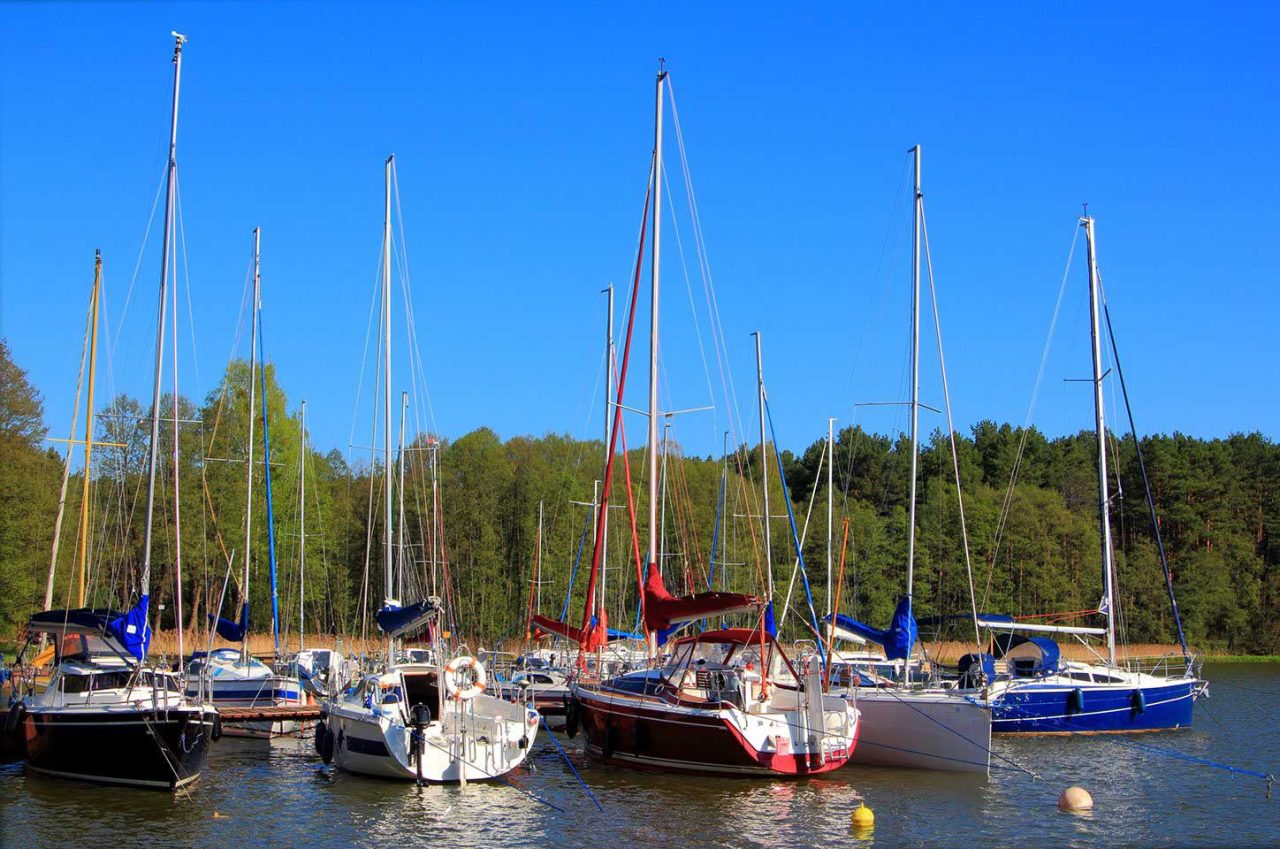
How much space do you have for your things on a yacht?
Before you start packing, you need to know one thing: a yacht is not like a hotel. Space below deck is limited, which is why your luggage should not be large, hard or awkward to store.
The most sensible “container” is a soft sports bag or a sailing duffel. Suitcases on wheels and rigid hiking backpacks cannot be bent or pushed under the berths, so they end up in the way. Your bag should fit comfortably into the storage space under the bunk. Assume you have roughly as much room as for a three-day trip to the mountains, even if the cruise lasts a week. One soft bag of 40–60 litres is the right choice, whether you choose sailing yachts or motorboats. Pack it so the things you use most often stay on top. Put your jacket right on top or in a separate mesh bag. Keep your toiletries together instead of scattering them through different pockets. Fold your clothes tightly. It sounds simple, but with limited space a badly packed bag becomes noticeable every single day.
Clothes for sailing, or how not to be misled by the weather on the lake
The weather in Masuria can change quickly and you need to expect that. It may be cold and windy in the morning, sunny and hot at noon, and clearly cooler again in the evening. That is why the most universal advice works best here: dress in layers. It is the only sensible strategy, whether you are travelling in June or in August.
The key item is a windproof jacket with a hood. It does not have to be a professional offshore sailing jacket. A good hiking jacket with a membrane that blocks wind and rain is enough. What matters is the hood. It really helps. It is also worth choosing one that reaches to mid-thigh, because when you sit on the rail your legs can get completely wet. A jacket without a hood on sailing yachts is a mistake most people make only once. Add a fleece or a thicker sweatshirt for cooler evenings, a few T-shirts with short and long sleeves, and comfortable trousers. Shorts are also worth taking because in the middle of the day, when the sun is out, it can get genuinely warm. Clothing for a yacht is not a separate category that requires specialist gear. Most things already in your wardrobe will do, as long as they are comfortable, quick-drying and not something you would regret getting wet.
Shoes are a separate topic. You should step on board only in footwear with a flat rubber sole. A wet deck can be very slippery, so canvas shoes with a rubber sole or dedicated sailing shoes work well. Flip-flops stay for the jetty and the shower in the harbour. They have no place on deck if you care about your safety and the safety of others.
What should you take on board or into the cabin for the night?
When you charter a yacht, bedding, a duvet and a pillow are usually provided. Even so, many sailors prefer to sleep in their own sleeping bag. The reason is simple: a sleeping bag is predictable and you know what temperature range it is suitable for. On colder nights, and they do happen even in August, a light summer sleeping bag makes a big difference. It takes up little space, and overnight comfort directly affects how you feel the next day on board.
Now for the shower. Realistically, for most of the week you will wash in ports, where there are bathrooms. That is why it is worth taking flip-flops for the port and a quick-drying towel. It dries within minutes, does not go musty in a damp cabin and does not take up half the bag like a cotton towel. It is best to pack your toiletries into one compact wash bag, as mentioned earlier. This is not about aesthetics but about being able to grab it with one hand and head out when needed. Alongside the standard items, take a high-factor sunscreen, because sunlight reflected from the water is intense. Mosquito repellent is also useful. Evenings on the water are beautiful, but insects are active and can quickly ruin the mood after sunset.
Things people forget to pack for a sailing trip
As for documents, an ID card is enough for a sailing trip in Masuria. If you take regular medication, bring enough for the whole stay plus a few extra days. Add basic painkillers or fever medicine and some plasters. A first-aid kit is provided on the yacht by the charter company.
As for the rest, you can charge your phone on the yacht without any problem because 12V or 230V sockets are standard. A power bank is worth taking as a backup, especially if you use your phone for navigation or photos. If you bring a camera, make sure it has a waterproof case or some other protection, because splashes on deck are very possible. A head torch is a tiny item that weighs almost nothing and can save your evening. When mooring in a harbour, looking for something in the locker under a berth or stepping out onto the deck at night, having both hands free is invaluable. It is one of those things that seem unnecessary on land and obvious once you are on a yacht.
Below is a checklist of the things worth taking with you. Good luck with the packing
Checklist of things to take sailing
Luggage and overnight stay
- soft sports bag or sailing duffel (40–60 l)
- summer sleeping bag
- quick-drying towel
Clothing
- windproof jacket with a hood and membrane
- fleece or thicker sweatshirt
- T-shirts with short and long sleeves (2–3 pieces)
- trousers or leggings (1–2 pairs)
- shorts
- underwear for each day plus some extra
- shoes with a flat rubber sole
- flip-flops for the harbour
- cap with a peak
- polarised sunglasses
Hygiene and health
- wash bag with everyday toiletries
- high-factor UV sunscreen
- mosquito repellent
- regular medication with an extra supply
- motion-sickness tablets, if needed
- plasters and disinfectant
Electronics and small essentials
- power bank
- head torch
- ID
Read on
- Yacht charter in Masuria - the complete guide Chartering a yacht in Masuria is one of the best ways to spend a holiday close to nature, away from the crowds and at your own pace. At the same time, for many people — especially on their first cruise — it raises a lot of questions, uncertainty and worries: which yacht to choose, how much it really costs, what formalities are required and how to avoid common mistakes.
- What yacht to choose for a couple, family or group The choice of yacht has a real impact on how your whole cruise in Masuria will go. A boat that is too small limits comfort, while one that is too large can cause unnecessary stress, especially when manoeuvring in harbour.
- Yacht charter in September - is it a good idea? September is a good time to charter a yacht in Masuria. Most sailors will confirm this in private conversation, but less often turn it into an actual booking – because July and August seem the safer choice. Meanwhile, September in Masuria is quieter, cheaper and – for those who value sailing more than relaxing by the pool – simply more about sailing.
Picked your dates?
See which yachts are available, or give us a call.


 English (UK)
  Polski